Monday, 25 June 2012

Glencore protests at Bolivia mine nationalisation


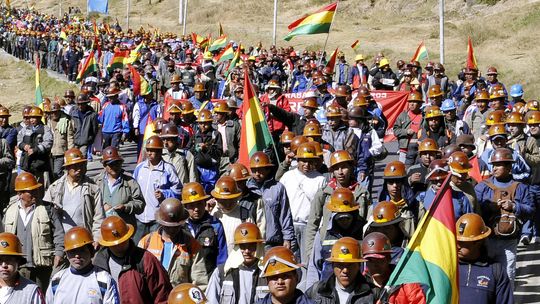
LONDON – Angered by the nationalisation of a tin and zinc mine in Bolivia, global commodities firm Glencore said on Friday it may seek compensation domestically or abroad.
Bolivia's leftist government, headed by Evo Morales, took over operations at the Colquiri mine on Wednesday after weeks of violent protests.
Morales, who has already nationalised the Andean country's natural gas and electricity industries, said the decree brought the local operating company Sinchi Wayra - which has been owned by Glencore since 2005 - back into state hands, resolving the dispute between employees and independent miners that has left 18 injured. Read more here...

To whose mining tune will next week’s ANC Policy Conference dance?


JOHANNESBURG (miningweekly.com) – The ultimate outcome of South African mining industry policy could be decided next week when the National Policy Conference of the ruling African National Congress (ANC) takes place from June 26 to 29.
On the eve of the conference, Mineral Resources Minister Susan Shabangu has expressed the hope that South Africa’s marathon debate on the nationalisation of its mining industry will be finally “laid to rest”.
Shabangu has herself expressed the strongest “not in my lifetime” views about mine nationalisation and President Jacob Zuma and leading members of his Cabinet have consistently reiterated that nationalisation is not government policy. Read more here...

AngloGold reports Moab Khotsong fatality


JOHANNESBURG (miningweekly.com) – South African miner AngloGold Ashanti on Friday reported a fatal accident at its Moab Khotsong mine, near Orkney.
The company stated that a driller was struck by a fall of ground, on Thursday.
It said in a statement that management suspended all drilling and blasting operations at the mine, though safety-related activities such as installing support continue.
Members of the Department of Mineral Resources inspectorate would be carrying out an inspection of the scene of the accident.
This is the fourth fatality at an AngloGold Ashanti mine this year. Last week, the company reported a mine death at its Great Noligwa operation, near Klerksdorp.

Local HSE culture benefits from global support


While health, safety and environ- ment (HSE) challenges in South Africa are similar to those in other parts of the world, Fluor South Africa is also tasked with managing diverse cultures and groups, often with different belief systems and languages, as one uniform team in complex work environments.
Fluor corporate HSE Africa director Shane van der Nest tells Mining Weekly that because each project site is unique, health and safety plans consistent with Fluor’s global practices are tailored to each and every site. Project site-specific plans are also tailored to adhere to local regulatory, contractual and client-specific requirements.
“In South Africa, we use a broad communication strategy that includes multiple languages and visual representations of safety practices to help unify and inform workers. Pictorial booklets are used to illustrate lessons learned, safe work practices and HSE tools,” says Van der Nest. Read more here...

Peru's Humala says water guaranteed near Newmont mine


Ollanta Humala 

LIMA - Peruvian president Ollanta Humala said on Saturday Newmont Mining would ensure ample water for towns near its proposed Conga gold mine, and that his government would not allow new mines to open if they hurt water supplies.
US-based Newmont on Friday accepted a stricter environmental mitigation plan for its mine, which will now require total investments of $5-billion, making it the most expensive mine in Peruvian history.
Newmont said that before the mine is built it will first build larger reservoirs that will guarantee year-round water supplies in towns currently suffering shortages. The bigger reservoirs are expected to add up to $200-million to the project's original $4.8-billion price tag and take up to two years to build. Read more here...

Newmont accepts stricter conditions for Peru mine


LIMA - Newmont Mining said on Friday it has accepted a stricter environmental mitigation plan for its $4.8-billion Conga gold mine and could resume work on the massive project.
Conga, the biggest mining project ever proposed in Peru, has been stalled since November because of ongoing protests by community groups who say it would hurt water supplies and cause pollution.
Newmont said that before the mine is built it will first build reservoirs that will guarantee year-round water supplies in towns that currently suffer shortages.
In an attempt to quell protests, the government had hired outside experts to recommend improvements to the company's own environmental impact plan. Read more here...

Company on the brink of proving solar energy benefits to industry


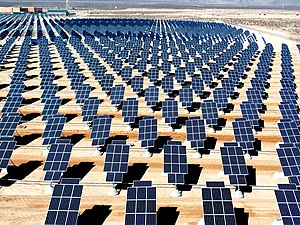
Energy and lifestyle solutions provider Optimum PM is on the brink of proving the viability of solar energy technology in the mining industry by running pilot programmes at mining operations across South Africa. This will silence the doubts regarding the use of this renewable technology in mining operations, states Optimum PM energy executive director and founder John Shiri.
The company states that it is in the process of negotiating with mining companies to install solar-based heating and cooling plants with heat pumps that use heat from the bedrock, to supplement power systems that reduce operational costs including maintenance costs of mines and processing plants. Read more here...

Fatalities, adverse ground conditions delay Ghaghoo production


JOHANNESBURG (miningweekly.com) – London-listed diamond producer Gem Diamonds on Monday said two contract workers died at its Ghaghoo underground mine project, in Botswana, when the ground collapsed at the face of the tunnel development.
The combination of the fatalities – the mine’s first in 2012 – and adverse ground conditions, was expected to delay the start of first diamond production until the first half of 2014.
Production at the Ghaghoo mine, which is located about 200 km north of Gaborone and falls within the Central Kalahari Game Reserve, was initially anticipated to start during the third quarter of 2013 at an initial rate of 100 000 ct/y, to be increased over time to a peak of 780 000 ct/y. Read more here...