Wednesday, 23 May 2012

Worker killed at Northam’s Zondereinde mine


JOHANNESBURG (miningweekly.com) – A worker has died at JSE-listed Northam Platinum’s Zondereinde mine, in Limpopo, following a fall-of-ground incident on Tuesday.
Work at the affected shaft was suspended following a Section 54 order by the Department of Mineral Resources.
The company said no other employees had sustained injuries.
Last year, three workers were killed at the mine.

Brazilian group targeting more African opportunities


Brazilian diversified mining major Vale has confirmed that its portfolio includes investments of $7.7-billion in projects in nine African countries. Speaking at a recent seminar on Africa hosted by Brazil’s National Economic and Social Development Bank (better known by its Portuguese initials, BNDES), Vale CEO Murilo Ferreira reaffirmed the importance of Africa in his company’s strategy.
He highlighted that Vale continued to be interested in the continent and specifically cited coal and copper as sectors in which Vale continued to make investments in Africa. These sectors have the potential to grow Vale’s African business, he pointed out. 
“For example, our investment in Mozambique is high –” said Ferreira, “equivalent to a third of the gross domestic product of that country.” Read more here...

De Beers mounts rescue bid for trapped illegal Namaqua diamond diggers


JOHANNESBURG (miningweekly.com) – Diamond miner De Beers has mounted a rescue bid for at least seven illegal diamond diggers who are trapped in illegally excavated tunnels at De Beers' Namaqua diamond mines in the Northern Cape.
De Beers and Namaqualand Mines said that the illegal diggers were working in the Bontekoe area on the northern boundary of Namaqualand Mines and State-owned land.
De Beers is in the process of transferring the operation to JSE-listed Trans Hex.
Mine management confirm that one person has been rescued and taken to hospital, and six or more people are being sought. Read more here...

Monday, 14 May 2012

Argonaut wants S Australia govt to focus on legislation change


PERTH (miningweekly.com) - ASX-listed Argonaut Resources on Friday welcomed the Australian High Court’s decision to reject an application by the South Australian government to appeal against a Supreme Court decision that overturned an approval by the Aboriginal Affairs Minister allowing for exploration at the Lake Torrens area.
Argonaut and its joint venture (JV) partner Straits Resources had sought rights to explore on a small area of Lake Torrens, and in addition to native title approvals, the JV had sought Aboriginal heritage authorisation from the Minister, which was subsequently granted.
However, the authorisation became the subject of a judicial review in 2011, and the Supreme Court found that the Minister for Aboriginal Heritage had failed to afford traditional owners procedural fairness in granting the authorisation. Read more here...

Draft regulations to improve dust management on mines


The introduction of dust control regulations, which are currently being drafted, could result in potential liabilities for opencast mines in South Africa and have a definite impact on the already extensively regulated mining industry, says business law firm Bell Dewar.
In May last year, the Department of Envi- ronmental Affairs released the draft National Dust Control Regulations, under Section 32 of the National Environmental Management: Air Quality Act of 2004, for public comment.
The regulations are aimed at prescribing general measures for the control of dust in all areas, including residential and light commer- cial areas.
The draft regulations propose the prohibition of dust pollution above specified levels and the establishment of criminal liability for noncompliance, as well as new tools for air quality offi- cers to better monitor dust emissions. Read more here...

Environmental impact weighs heavy on opencast mining operations


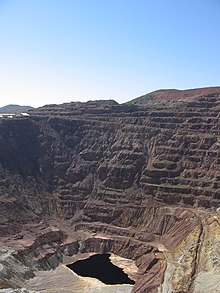
Opencast mining has become increasingly unpopular with non-governmental organisations and government authorities owing to its high environmental footprint, but the method is still the most economical option for mining houses, says minerals industry consultant Venmyn director Neil McKenna.
“Compared with underground mining, the single biggest challenge faced by opencast mining is its environmental impact as a result of the large mining footprint associated with bulk commodity mining.”

For instance, the South Cotabato province of the Philippines banned opencast mining in 2010. The ban is hindering the progress of diversified miner Xstrata’s $5.9-billion Tampakan mine. The project is considered to be the biggest undeveloped copper/gold prospect in South-East Asia, with an estimated yearly average production of 375 000 t of copper and 360 000 oz of gold over an initial 17-year mine life. Read more here...

New programme to assist miners and environmental organisations to work together


A major challenge faced by the African World Heritage Fund (AWHF) is the absence of scientific evidence to prove the effect that mining, especially opencast mines, have on heritage sites.

AWHF director Dr Webber Ndoro states that universities should be encouraged to conduct studies to document physical evidence of the effects mining has on World Heritage Sites and the environment.

“At the moment, everyone is aware of the possible implications of opencast mines on World Heritage Sites, particularly with regard to dust, but these implications need to be scientifically proved and supported.”

Ndoro adds that the AWHF aims to encourage mining companies to continually communicate with government and heritage professionals through the implementation of its expert workshop. Read more here...

Tuesday, 8 May 2012

Colombia extends ban on mining permit requests to Aug


BOGOTA – Colombia has again extended a ban on new requests for mining permits until August, when a new mining agency should start operations in the mineral-rich country, the government said.
The world's No 4 coal exporter has been hit by a series of mine explosions and accidents that has killed hundreds in the past few years and has also struggled to keep up with a flood of requests for mining permits, which prompted the government to create a new regulatory agency. Read more here...

SA mine deaths fall to monthly low - Minister


Mineral Resources Minister Susan Shabangu 

JOHANNESBURG – A safety crackdown on the South African mining industry reduced the number of fatalities in the country's mines to three in April, from an average of 11 or more a month, Mineral Resources Minister Susan Shabangu said.
"There has been a significant improvement on health and safety since the department intensified enforcement measures at the mines," Shabangu said in a speech to the National Council of Provinces dated May 3, which was obtained by Reuters on Monday.
"In fact, the month of April 2012 has recorded the lowest fatalities ever, of three deaths, when compared with other historical figures, which were generally more than 11 deaths per month," she said. Read more here...

AMD problem in SA not widely understood


The biggest challenge in the effective treatment of acid mine drainage (AMD) in South Africa is finding solutions that integrate the technical, financial, environmental and community aspects and that are accepted by all stakeholders, says global management consulting firm AT Kearney.
The company has conducted a study to improve the public understanding of AMD and how it is viewed by different communities in South Africa, and is in the process of developing a stakeholder solution that could be accepted by all parties involved, principalMartin Sprott adds.
“Currently, there isn’t a clear view in South Africa about the effects of AMD and what should be done to tackle the problem, and this is what we are trying to achieve,” Sprott explains. Read more here...

Miners will battle resource grabs - Glencore


ST GALLEN, Switzerland – Mining companies will fight growing resource nationalism and could pull out of countries where governments are demanding too large a share of the pie, commodities giant Glencore warned on Friday, a day after Argentina nationalised the country's biggest oil firm.
"The mining industry is forming tight groups among each other on how we are going to fight it...," Glencore Chief Executive Ivan Glasenberg said.
Glasenberg, speaking at a conference in the Swiss town of St Gallen, warned there would be consequences to producer countries seeking an ever larger share of mining profits, a trend which has risen alongside commodity prices as the main mining constituencies raise taxes and royalties.
Glasenberg, whose company is in the throes of a tie-up with miner Xstrata, warned Glencore would not hesitate to withdraw investments in places like Africa if governments change the terms of existing contracts in their favour. Read more here...